

Hey there! As a supplier of Hand Lever Hoists, I often get asked about all sorts of technical details regarding these nifty tools. One question that pops up quite a bit is, "What is the pitch of the load chain of a hand lever hoist?" Well, let's dig into it and break it down in a way that's easy to understand.
First off, let's talk about what a hand lever hoist is. If you're not familiar, a Hand Lever Hoist is a manual lifting device that uses a lever to lift or pull heavy loads. It's super handy in a lot of different industries, like construction, manufacturing, and even in some home workshops. You can use it to lift engines, move heavy machinery, or hoist up building materials.
Now, onto the load chain pitch. The pitch of a load chain refers to the distance between the centers of two consecutive pins in the chain. It's a crucial measurement because it affects how the hoist operates. A smaller pitch generally means the chain can fit into tighter spaces and may offer more precise movement. On the other hand, a larger pitch chain might be stronger and more durable, able to handle heavier loads.
Think of it like the teeth on a gear. If the teeth are closer together (small pitch), the gear can make finer adjustments. But if the teeth are farther apart (large pitch), the gear can transfer more power, but with less precision. In a hand lever hoist, the load chain pitch works in a similar way.
The pitch of the load chain is determined by the design and intended use of the hoist. For light - duty hoists that are used for smaller loads and more delicate work, you'll often find a smaller pitch chain. These hoists are great for jobs where you need to lift something gently and with a high degree of control, like positioning a small engine in a workshop.
For heavy - duty applications, a hoist with a larger pitch load chain is the way to go. These hoists can handle massive weights, like large steel beams in a construction site. The larger pitch chain is built to withstand the high stress and strain that comes with lifting extremely heavy objects.
When choosing a hand lever hoist, it's important to consider the pitch of the load chain based on your specific needs. If you're not sure, you can always consult with a professional or look at the manufacturer's specifications. They'll usually tell you the recommended load capacity and the pitch of the chain for each model.
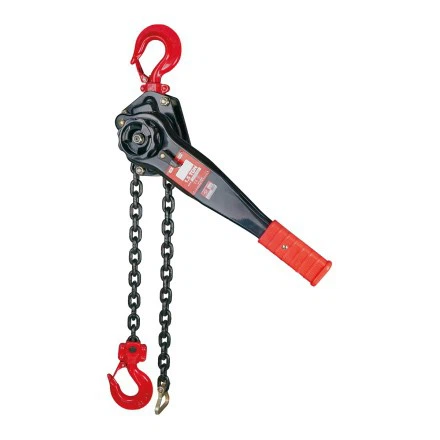

Another thing to keep in mind is the compatibility of the chain with the hoist. The hoist is designed to work with a specific pitch chain. Using the wrong pitch chain can lead to problems, like the chain not fitting properly or the hoist not operating smoothly. It can even be dangerous, as it may cause the hoist to malfunction and drop the load.
Now, let's compare hand lever hoists with other types of manual lifting tools. There are Hand Winches and Hand Chain Hoists. Hand winches are great for pulling loads horizontally. They use a drum to wind up a cable or rope, and they're often used in applications like towing or pulling a vehicle out of a ditch.
Hand chain hoists, on the other hand, are similar to hand lever hoists in that they're used for vertical lifting. But they operate a bit differently. Instead of a lever, they use a chain to lift the load. The pitch of the chain in a hand chain hoist also plays an important role in its performance, just like in a hand lever hoist.
In my experience as a supplier, I've seen that the choice between a hand lever hoist, hand winch, or hand chain hoist depends on the job at hand. If you need a tool that's easy to operate with one hand and offers quick, powerful lifting, a hand lever hoist is a great option. If you're dealing with horizontal pulling, a hand winch is the way to go. And if you prefer a more traditional chain - operated lifting tool, a hand chain hoist might be your best bet.
Maintenance is also a key factor when it comes to the load chain of a hand lever hoist. You should regularly inspect the chain for any signs of wear, such as cracks, bends, or excessive stretching. A damaged chain can be a safety hazard, so it's important to replace it as soon as you notice any issues.
Lubrication is another important aspect of chain maintenance. Keeping the chain well - lubricated helps to reduce friction and wear, which can extend the life of the chain and the hoist. You can use a specialized chain lubricant, and make sure to follow the manufacturer's instructions on how often to lubricate the chain.
If you're in the market for a hand lever hoist, or any other manual lifting tool, I'd love to help you find the right one for your needs. Whether you're a professional in the industry or a DIY enthusiast, having the right tool can make all the difference in your projects.
We offer a wide range of hand lever hoists with different load capacities and chain pitches. Our team of experts can assist you in choosing the perfect hoist for your specific requirements. Just reach out to us, and we'll be more than happy to have a chat about your needs and help you make an informed decision.
In conclusion, the pitch of the load chain of a hand lever hoist is a critical factor that affects its performance, load - handling capacity, and precision. Understanding this concept can help you choose the right hoist for your job and ensure its safe and efficient operation. So, don't hesitate to get in touch if you have any questions or if you're ready to start your purchase. We're here to support you every step of the way.
References
- General knowledge of manual lifting tools in the industry.
- Manufacturer specifications and guidelines for hand lever hoists.


