

What is the torque required to operate a hand winch?
As a supplier of hand winches, I often get asked about the torque required to operate these essential tools. Understanding torque is crucial for both the proper use and selection of a hand winch. In this blog post, I'll delve into the concept of torque, how it relates to hand winches, and factors that influence the required torque.
Understanding Torque
Torque is a measure of the force that can cause an object to rotate about an axis. In the context of a hand winch, torque is the force applied to the winch handle to turn the drum and lift or pull a load. Mathematically, torque (τ) is calculated as the product of the force (F) applied perpendicular to the lever arm (r) and the length of the lever arm: τ = F × r.
For example, if you apply a force of 50 Newtons at the end of a winch handle that is 0.5 meters long, the torque applied to the winch is τ = 50 N × 0.5 m = 25 N·m.
Torque Requirements for Hand Winches
The torque required to operate a hand winch depends on several factors, including the load capacity of the winch, the diameter of the winch drum, and the mechanical advantage of the winch mechanism.
- Load Capacity: The primary factor influencing the torque requirement is the weight of the load being lifted or pulled. A heavier load will require more torque to move. For instance, a hand winch designed to lift a 1000-kilogram load will need more torque than one designed for a 500-kilogram load.
- Drum Diameter: The diameter of the winch drum also affects the torque requirement. A larger drum diameter means that the load is wound around a larger circumference, requiring more force to turn the drum. Conversely, a smaller drum diameter reduces the torque needed to move the load.
- Mechanical Advantage: Hand winches often incorporate gears or other mechanical devices to increase the mechanical advantage. A higher mechanical advantage means that less force (and therefore less torque) is required to move the load. For example, a winch with a gear ratio of 5:1 will require only one-fifth of the torque compared to a winch without a gear mechanism.
Calculating the Torque Required
To calculate the torque required to operate a hand winch, you can use the following formula:
[T = \frac{W \times r_d}{n \times \eta}]
Where:
- (T) is the torque (in N·m)
- (W) is the weight of the load (in N)
- (r_d) is the radius of the winch drum (in m)
- (n) is the mechanical advantage of the winch mechanism
- (\eta) is the efficiency of the winch mechanism
Let's consider an example. Suppose you have a hand winch with a load capacity of 500 kilograms (weight (W = 500 \times 9.81 = 4905) N), a drum radius of 0.1 meters, a mechanical advantage of 4, and an efficiency of 0.8. Using the formula above, the torque required to operate the winch is:
[T = \frac{4905 \times 0.1}{4 \times 0.8} = \frac{490.5}{3.2} \approx 153.3\ N·m]
Factors Affecting Torque Requirements
In addition to the load capacity, drum diameter, and mechanical advantage, several other factors can affect the torque required to operate a hand winch:
- Friction: Friction within the winch mechanism, such as in the gears, bearings, and brake, can increase the torque requirement. Regular maintenance, including lubrication, can help reduce friction and minimize the additional torque needed.
- Incline or Decline: If the load is being lifted or pulled on an incline or decline, the effective weight of the load will change, affecting the torque requirement. For example, pulling a load up an incline will require more torque than pulling it on a flat surface.
- Speed of Operation: Operating the winch at a higher speed may require more torque, especially if the winch mechanism has to overcome inertia. Slower, more controlled operation can reduce the torque demand.
Choosing the Right Hand Winch Based on Torque Requirements
When selecting a hand winch, it's important to consider the torque requirements based on your specific application. Here are some tips to help you choose the right winch:
- Determine the Load Capacity: Calculate the maximum weight of the load you need to lift or pull and choose a winch with a load capacity that exceeds this value.
- Consider the Drum Diameter: If you need to operate the winch with a relatively low torque, choose a winch with a smaller drum diameter. However, keep in mind that a smaller drum diameter may result in a slower lifting or pulling speed.
- Evaluate the Mechanical Advantage: Look for a winch with a high mechanical advantage to reduce the torque required to operate the winch. This can make the winching process easier and more efficient.
- Check the Efficiency: A winch with high efficiency will require less torque to operate. Look for winches with well-designed gears and bearings to minimize friction and maximize efficiency.
Related Products
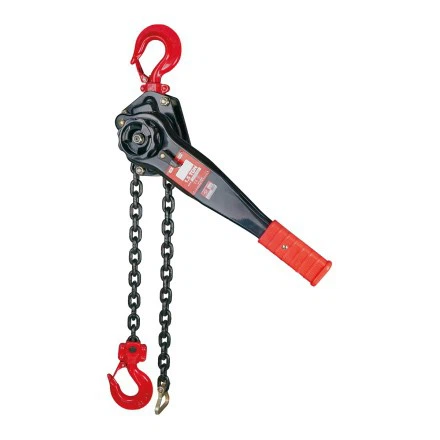
In addition to hand winches, we also offer other manual lifting and pulling tools, such as Hand Lever Hoist and Hand Chain Hoist. These tools are also designed to provide reliable and efficient lifting solutions.

Conclusion
Understanding the torque required to operate a hand winch is essential for choosing the right winch for your application and ensuring safe and efficient operation. By considering factors such as load capacity, drum diameter, mechanical advantage, and friction, you can calculate the torque requirement and select a winch that meets your needs.
If you're interested in purchasing a hand winch or need further information about torque requirements and winch selection, please don't hesitate to contact us. Our team of experts is ready to assist you in finding the perfect solution for your lifting and pulling needs.
References
- Machinery's Handbook, 31st Edition, Industrial Press Inc.
- ASME B30.21 - Standard for Hand Chain Hoists
- OSHA Regulations on Powered and Manual Hoists


