

As a supplier of gantry cranes, I often receive inquiries from customers about various aspects of our products, including the parking brake system of mobile gantry cranes. In this blog post, I will delve into the details of the parking brake system of mobile gantry cranes, explaining its importance, types, working principles, and maintenance requirements.
Importance of the Parking Brake System
The parking brake system in a mobile gantry crane is a crucial safety feature. Mobile gantry cranes are designed to be moved around a worksite, and when they are stationary, either during loading and unloading operations or when not in use, the parking brake ensures that the crane remains in place. This is especially important in industrial environments where there may be uneven surfaces, slopes, or external forces such as wind. A reliable parking brake prevents the crane from rolling or shifting unexpectedly, which could lead to accidents, damage to the crane and surrounding equipment, and even endanger the lives of workers.
Types of Parking Brake Systems
There are several types of parking brake systems used in mobile gantry cranes, each with its own advantages and applications.
Mechanical Brakes
Mechanical brakes are one of the most common types of parking brakes in mobile gantry cranes. They work on the principle of friction. A mechanical brake typically consists of brake shoes or pads that are pressed against a rotating part, such as a brake drum or disc, to create friction and stop the movement.
- Drum Brakes: In a drum brake system, the brake shoes are located inside a drum attached to the wheel or axle of the gantry crane. When the parking brake is engaged, a lever or cable mechanism forces the brake shoes against the inner surface of the drum, generating friction and preventing the wheel from turning. Drum brakes are relatively simple and cost - effective, making them a popular choice for many mobile gantry cranes.
- Disc Brakes: Disc brakes use a flat disc attached to the wheel or axle. Brake calipers, which contain brake pads, squeeze the disc from both sides when the parking brake is applied. Disc brakes offer better heat dissipation than drum brakes, which means they can maintain their braking performance better under heavy use. They also provide more consistent braking force and are less prone to fade.
Hydraulic Brakes
Hydraulic brakes use hydraulic pressure to apply the braking force. In a hydraulic parking brake system, a hydraulic cylinder is used to push the brake pads or shoes against the braking surface. Hydraulic brakes offer several advantages, including smooth and precise braking, high braking force, and the ability to be easily integrated with the crane's existing hydraulic system. They are often used in larger and more heavy - duty mobile gantry cranes where a higher level of braking performance is required.

Electric Brakes
Electric brakes are another option for mobile gantry cranes. These brakes are activated by an electric current. When the parking brake is engaged, an electromagnetic field is created, which either attracts or repels a braking component to apply the braking force. Electric brakes are known for their fast response times and can be easily controlled electronically. They are suitable for applications where quick and reliable braking is needed, such as in automated or semi - automated gantry crane operations.
Working Principles of the Parking Brake System
The working principle of a parking brake system depends on its type. However, the general process can be described as follows:
-
Engagement: When the operator decides to engage the parking brake, they typically use a control mechanism, such as a hand lever, foot pedal, or an electronic switch. This action activates the brake system.
-
Force Application: In mechanical brakes, the control mechanism pulls a cable or operates a lever to transfer the force to the brake shoes or pads, pressing them against the braking surface. In hydraulic brakes, the control signal activates a hydraulic pump or valve, which builds up hydraulic pressure in the brake cylinder to apply the braking force. In electric brakes, the electric current creates an electromagnetic force that moves the braking components.
-
Locking: Once the braking force is applied, the brake system locks the wheels or axles of the gantry crane in place, preventing any movement.
-
Release: To release the parking brake, the operator reverses the process. For mechanical brakes, the control lever is moved back to its original position, releasing the tension on the cable or lever and allowing the brake shoes or pads to disengage from the braking surface. In hydraulic brakes, the hydraulic pressure is released, and in electric brakes, the electric current is cut off.
Maintenance Requirements
Proper maintenance of the parking brake system is essential to ensure its reliable operation and the safety of the mobile gantry crane. Here are some key maintenance tasks:
- Regular Inspections: Conduct visual inspections of the brake components, including the brake shoes, pads, drums, discs, calipers, cables, and hydraulic lines. Look for signs of wear, damage, or corrosion. Replace any worn or damaged parts immediately.
- Lubrication: If the parking brake system has moving parts, such as levers or pivots, lubricate them regularly to ensure smooth operation. However, be careful not to get lubricant on the braking surfaces, as this can reduce the friction and braking performance.
- Adjustment: Over time, the brake shoes or pads may wear down, which can affect the braking performance. Adjust the brake system as needed to maintain the proper clearance between the brake components and the braking surface.
- Testing: Periodically test the parking brake to ensure it is working properly. This can be done by engaging the brake and trying to move the gantry crane slightly. If the crane moves or the brake does not hold, further inspection and adjustment are required.
Choosing the Right Parking Brake System for Your Mobile Gantry Crane
When selecting a parking brake system for a mobile gantry crane, several factors need to be considered:
- Crane Size and Capacity: Larger and heavier gantry cranes require a more powerful parking brake system to ensure they can be safely held in place. Hydraulic or electric brakes may be more suitable for these applications.
- Operating Environment: If the crane is used in a harsh environment, such as an outdoor construction site with a lot of dust and moisture, a brake system that is resistant to corrosion and contamination should be chosen. Disc brakes, for example, are generally more resistant to these conditions than drum brakes.
- Frequency of Use: For cranes that are used frequently, a brake system that can withstand heavy use and has good heat dissipation, such as disc brakes or electric brakes, may be a better choice.
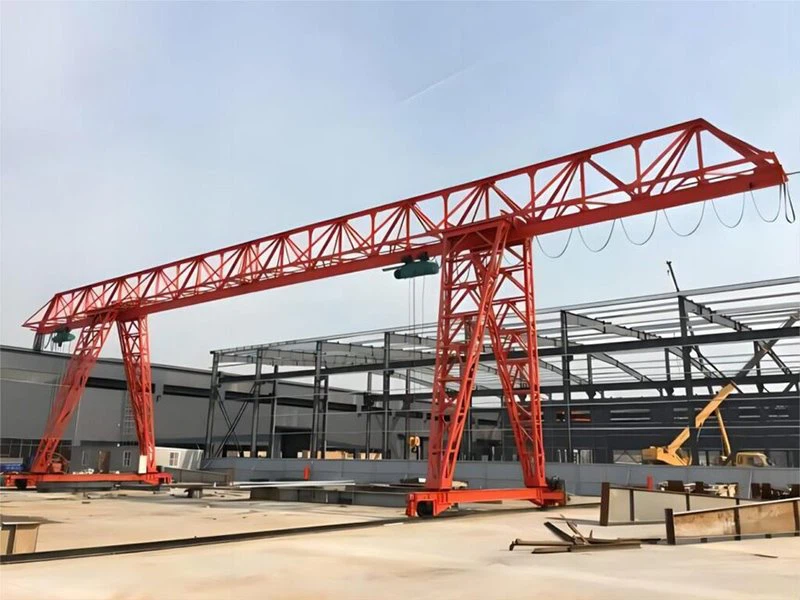
As a gantry crane supplier, we offer a wide range of mobile gantry cranes, including Double - girder Gantry Crane and Single - girder Gantry Crane. Each of our cranes is equipped with a high - quality parking brake system that is designed to meet the specific needs of our customers.
If you are in the market for a mobile gantry crane or have any questions about our parking brake systems, we encourage you to contact us for procurement and further discussion. Our team of experts is ready to assist you in choosing the right crane and brake system for your application.
References
- "Crane Design and Safety Standards" - Industrial Crane Manufacturers Association
- "Hydraulic and Mechanical Brake Systems in Heavy Equipment" - Journal of Heavy Machinery Engineering
- "Electromagnetic Brakes: Principles and Applications" - Electrical Engineering Research Journal


