

Hey there! As a supplier of Manual Stacker Trucks, I often get asked about the maximum weight of the load that can be safely tilted on these nifty machines. It's a crucial question, especially for those in the warehousing, logistics, and manufacturing industries. So, let's dive right in and explore this topic in detail.
First off, what exactly is a manual stacker truck? Well, it's a hand - operated piece of equipment designed to lift and stack loads. It's a real workhorse in many warehouses, offering a cost - effective and efficient way to move goods around. If you're interested in other related equipment, you can check out our Electric Flat Car and Manual Hydraulic Pallet Truck on our website. And of course, for more info on our Manual Stacker Trucks, just click the link.

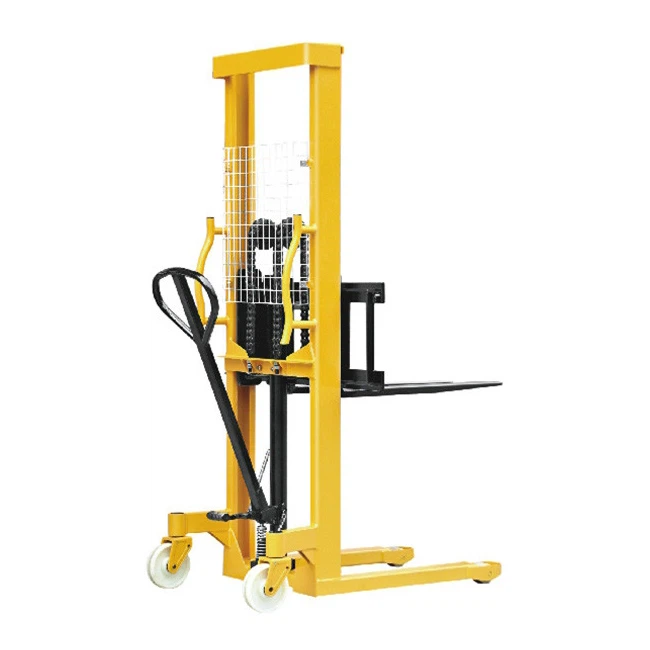
Now, back to the main question: what's the max weight for safe tilting? The answer isn't as straightforward as you might think. There are several factors that come into play when determining this limit.
Factors Affecting the Safe Tilt Load Capacity
1. Design and Construction
The overall design of the manual stacker truck is a major factor. Different models are built to handle different weights. Some stackers are more robust, with thicker steel frames and stronger hydraulic systems. These are typically capable of handling heavier loads. For example, a well - built stacker with a reinforced frame might be able to safely tilt a load of up to 2000 kilograms, while a more lightweight model could be limited to 500 kilograms.
2. Fork Length and Width
The dimensions of the forks also matter. Longer forks can distribute the weight of the load more evenly, which can increase the safe tilt capacity. However, if the forks are too long and the load is concentrated at the end, it can create a tipping hazard. Similarly, wider forks can provide more stability for larger loads, but they also need to be properly designed to support the weight.
3. Center of Gravity
The center of gravity of the load is crucial. If the load is not evenly distributed or if it's placed too high on the forks, it can shift the center of gravity and make the stacker unstable. A load with a high center of gravity is more likely to tip over during tilting. For instance, a tall and narrow load might have a higher center of gravity compared to a short and wide load of the same weight.
4. Hydraulic System
The hydraulic system is what allows the stacker to lift and tilt the load. A high - quality hydraulic system with a strong pump and well - calibrated cylinders can handle heavier loads more safely. If the hydraulic system is weak or poorly maintained, it can lead to issues such as slow lifting, uneven tilting, or even failure under heavy loads.
5. Tilt Angle
The angle at which you tilt the load also affects the safe weight capacity. As the tilt angle increases, the stability of the stacker decreases. Most manual stacker trucks have a recommended maximum tilt angle, usually around 10 - 15 degrees. Tilting the load beyond this angle can significantly reduce the safe weight limit and increase the risk of tipping.
How to Determine the Safe Tilt Load Capacity
Manufacturer's Specifications
The first and most important source of information is the manufacturer's specifications. Every manual stacker truck comes with a user manual that clearly states the maximum load capacity for lifting and tilting. This is based on extensive testing and engineering calculations. It's essential to follow these guidelines to ensure the safety of your operators and the longevity of the equipment.
Load Testing
In some cases, you might need to conduct load testing to verify the safe tilt capacity. This involves gradually increasing the weight of the load and tilting it to the recommended angle while monitoring the stability of the stacker. However, this should only be done by trained professionals in a controlled environment.
Safety Tips for Tilting Loads
1. Inspect the Equipment
Before each use, inspect the stacker for any signs of damage or wear. Check the forks, hydraulic hoses, wheels, and brakes. Make sure everything is in good working condition.
2. Proper Load Placement
Place the load evenly on the forks, with the center of gravity as low as possible. Avoid overloading the forks and ensure that the load is secured to prevent shifting during tilting.
3. Operator Training
Make sure your operators are properly trained on how to use the manual stacker truck safely. They should understand the safe tilt load capacity, the correct operating procedures, and the importance of following safety guidelines.
4. Use Safety Devices
Some manual stacker trucks come with safety devices such as anti - tip wheels or tilt limiters. Make sure these devices are in place and functioning correctly.
Real - World Examples
Let's say you're working in a small warehouse with a lot of small - to - medium - sized packages. You might choose a manual stacker truck with a safe tilt load capacity of around 1000 kilograms. This would allow you to handle most of your loads without any issues. On the other hand, if you're in a heavy - duty manufacturing environment where you need to move large and heavy components, you'd need a stacker with a higher capacity, perhaps 2000 kilograms or more.
In conclusion, determining the maximum weight of the load that can be safely tilted on a manual stacker truck is a complex process that depends on multiple factors. By understanding these factors, following the manufacturer's specifications, and implementing proper safety measures, you can ensure the safe and efficient operation of your stacker.
If you're in the market for a manual stacker truck or have any questions about load capacity and safety, don't hesitate to reach out. We're here to help you find the right equipment for your needs and ensure that you're using it safely.
References
- Manufacturer's user manuals for manual stacker trucks
- Industry standards and guidelines for material handling equipment


