

Hey there! As a scissor lift supplier, I often get asked about the differences between hydraulic scissor lifts and electric scissor lifts. It's a pretty common question, and it's an important one if you're in the market for a scissor lift. So, let's dive right in and break down the key differences between these two types of scissor lifts.
Power Source
The most obvious difference between hydraulic scissor lifts and electric scissor lifts is their power source. Hydraulic scissor lifts are powered by a hydraulic system, which uses fluid pressure to raise and lower the platform. This system typically consists of a hydraulic pump, cylinders, and hoses. On the other hand, electric scissor lifts are powered by electricity, either from a battery or a direct electrical connection.
Hydraulic scissor lifts are known for their high power and ability to handle heavy loads. They're often used in industrial settings where there's a need to lift large and heavy objects. The hydraulic system provides a smooth and stable lift, making it ideal for applications that require precision. However, because they rely on a hydraulic system, they can be a bit noisy and may require more maintenance compared to electric scissor lifts.
Electric scissor lifts, on the other hand, are more environmentally friendly and quieter than hydraulic scissor lifts. They're perfect for indoor use, such as in warehouses, factories, and shopping malls. Since they don't have a hydraulic system, they produce less noise and don't require as much maintenance. Electric scissor lifts are also more energy - efficient, which can save you money in the long run. However, their lifting capacity may be limited compared to hydraulic scissor lifts, especially for extremely heavy loads.
Mobility and Portability
When it comes to mobility, both types of scissor lifts have their own advantages. Hydraulic scissor lifts can be either self - propelled or towable. Self - propelled hydraulic scissor lifts are great for moving around large job sites. They usually have a powerful engine that allows them to travel at a decent speed and navigate different terrains. Towable hydraulic scissor lifts, on the other hand, are more portable and can be easily transported from one location to another using a vehicle.

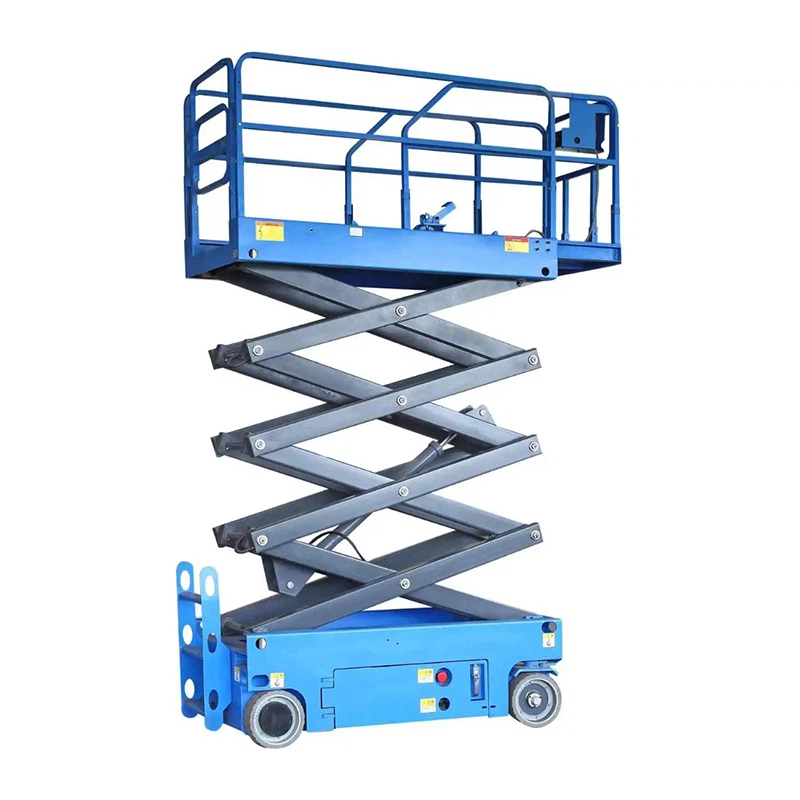
Electric scissor lifts are also available in self - propelled and stationary models. Self - propelled electric scissor lifts are very maneuverable, especially in tight spaces. They're often equipped with features like zero - turn radius, which makes them easy to operate in confined areas. However, their battery life can be a limiting factor for long - distance mobility. If you need to use the scissor lift for an extended period without access to a power source, you may run into issues.
Cost
Cost is another important factor to consider when choosing between a hydraulic scissor lift and an electric scissor lift. Generally, hydraulic scissor lifts are more expensive upfront. This is because of the complexity of the hydraulic system and the more powerful components required. Additionally, the maintenance costs for hydraulic scissor lifts can be higher due to the need to regularly check and replace hydraulic fluid, hoses, and seals.
Electric scissor lifts are usually more affordable to purchase. They have a simpler design and fewer components, which reduces the manufacturing cost. The maintenance costs are also lower since there's no hydraulic system to maintain. However, you need to factor in the cost of replacing the batteries over time, especially if you use the scissor lift frequently.
Safety Features
Both hydraulic and electric scissor lifts are equipped with a range of safety features. Hydraulic scissor lifts often have safety valves in the hydraulic system to prevent overloading and sudden drops. They also usually have emergency stop buttons and guardrails to protect the operator.
Electric scissor lifts come with similar safety features, such as emergency stop buttons and guardrails. In addition, they may have features like automatic leveling to ensure the platform is stable before use. Some electric scissor lifts also have sensors that can detect obstacles and stop the lift to prevent collisions.
Applications
The choice between a hydraulic scissor lift and an electric scissor lift also depends on the specific application. Hydraulic scissor lifts are commonly used in construction sites, where they need to lift heavy building materials and equipment. They're also used in outdoor industrial applications, such as in mining and oil fields.
Electric scissor lifts are more commonly used in indoor applications, as mentioned earlier. They're great for tasks like stock picking in warehouses, installing lights in shopping malls, and maintenance work in factories. If you're looking for a lift for a clean and quiet environment, an electric scissor lift is the way to go.
Conclusion
In conclusion, both hydraulic scissor lifts and electric scissor lifts have their own unique advantages and disadvantages. If you need a high - capacity lift for heavy - duty outdoor applications, a hydraulic scissor lift might be the best choice. On the other hand, if you're looking for an environmentally friendly, quiet, and cost - effective lift for indoor use, an electric scissor lift is a great option.
As a scissor lift supplier, I can help you determine which type of scissor lift is right for your specific needs. Whether you're interested in a Manual Hydraulic Platform Truck, a Scissor Lift, or an Articulated Boom Lift, I've got you covered.
If you're in the market for a scissor lift, don't hesitate to reach out. We can discuss your requirements in detail and find the perfect solution for your business. Whether you need a single scissor lift or a fleet of them, we can provide you with high - quality products and excellent service.
References
- "Lifting Equipment Handbook" - A comprehensive guide on different types of lifting equipment.
- Industry reports on scissor lift technology and market trends.


