

In the realm of manual lifting and pulling tools, hand winches and come - alongs are two commonly used devices. As a supplier of Hand Winches, I often encounter customers who are confused about the differences between these two tools. In this blog post, I will delve into the details of hand winches and come - alongs, highlighting their unique features, applications, and limitations to help you make an informed decision when choosing the right tool for your project.
1. Basic Definitions and Working Principles
Hand Winch
A Hand Winch is a mechanical device used for lifting, pulling, or tensioning loads. It typically consists of a drum around which a cable or rope is wound, a handle for manual operation, and a gear mechanism to increase the mechanical advantage. When the handle is turned, the drum rotates, and the cable or rope is either wound in or paid out, allowing the user to move the load. You can find a wide range of Hand Winches on our website Hand Winch.
The working principle of a hand winch is based on the concept of leverage. The gear mechanism in the winch multiplies the force applied by the user on the handle, enabling the winch to lift or pull heavy loads with relative ease. Different hand winches may have different gear ratios, which determine the amount of force multiplication and the speed at which the load is moved.
Come - Along
A come - along, also known as a hand - operated cable puller, is a portable tool designed for pulling or tensioning cables, ropes, or chains. It consists of a ratcheting mechanism, a cable or chain, and a hook at each end. The ratcheting mechanism allows the user to pull the cable or chain in one direction while preventing it from slipping back.
The operation of a come - along is relatively simple. The user attaches the hooks to the load and a fixed point, and then uses the handle to operate the ratcheting mechanism. With each pull of the handle, the cable or chain is gradually tightened, pulling the load towards the fixed point.
2. Design and Construction
Hand Winch
Hand winches come in various designs and sizes, depending on their intended applications. They can be classified into different types, such as portable hand winches, permanent - mounted hand winches, and heavy - duty industrial hand winches.
Portable hand winches are lightweight and easy to carry, making them suitable for on - the - go applications, such as towing small vehicles, pulling boats onto trailers, or tensioning fences. They are often made of aluminum or other lightweight materials to reduce weight without sacrificing strength.
Permanent - mounted hand winches are designed to be installed on a fixed structure, such as a wall, a beam, or a vehicle. They are typically more robust and can handle heavier loads compared to portable hand winches. These winches are commonly used in industrial settings, construction sites, and warehouses.
Heavy - duty industrial hand winches are built to withstand the toughest working conditions. They are made of high - strength steel and have a more complex gear mechanism to provide greater force multiplication. These winches are used for lifting and pulling extremely heavy loads, such as large machinery and equipment.
Come - Along
Come - alongs are generally more compact and lightweight compared to hand winches. They are designed to be portable and easy to use in various situations. Most come - alongs have a simple and straightforward design, with a few moving parts that are easy to maintain.
The cable or chain used in a come - along is usually made of high - strength steel to ensure durability and reliability. The hooks at the ends of the cable or chain are designed to securely attach to the load and the fixed point, preventing the load from slipping during the pulling process.
3. Load Capacity
Hand Winch
Hand winches are available in a wide range of load capacities, from a few hundred pounds to several tons. The load capacity of a hand winch depends on its design, construction, and gear ratio.
For light - duty applications, such as pulling small objects or tensioning cables, a hand winch with a load capacity of 500 - 2000 pounds may be sufficient. These winches are often used in household or DIY projects.
Medium - duty hand winches, with a load capacity of 2000 - 5000 pounds, are suitable for more demanding applications, such as towing small boats or vehicles, or lifting moderate - sized equipment.
Heavy - duty hand winches, with a load capacity of 5000 pounds or more, are used in industrial and commercial settings for lifting and pulling large and heavy loads.
Come - Along
Come - alongs typically have a lower load capacity compared to hand winches. Most come - alongs have a load capacity ranging from 1 - 5 tons. While they are not designed for lifting extremely heavy loads, they are still capable of handling a wide variety of pulling and tensioning tasks.
The lower load capacity of come - alongs is offset by their portability and ease of use. They are ideal for applications where a small to medium - sized load needs to be pulled or tensioned quickly and efficiently.
4. Applications
Hand Winch
Hand winches have a wide range of applications in different industries and settings. Some common applications include:
- Marine Industry: Hand winches are used for pulling boats onto trailers, adjusting sails, and mooring boats.
- Automotive Industry: They are used for towing vehicles, pulling engines out of cars, and tensioning drive belts.
- Construction Industry: Hand winches are used for lifting and positioning building materials, such as steel beams and concrete blocks.
- Agriculture: They are used for pulling farm equipment, tensioning fences, and moving heavy objects on the farm.
Come - Along
Come - alongs are commonly used in the following applications:
- Towing and Recovery: Come - alongs can be used to pull stuck vehicles out of mud, snow, or other difficult situations.
- Cable and Chain Tensioning: They are used for tensioning cables and chains in fences, gates, and other structures.
- Assembly and Installation: Come - alongs can be used to align and position components during the assembly and installation process.
- Home Improvement: They are useful for DIY projects, such as pulling down old walls or moving heavy furniture.
5. Advantages and Disadvantages
Hand Winch
Advantages:
- High Load Capacity: Hand winches can handle heavy loads, making them suitable for industrial and commercial applications.
- Versatility: They can be used for a wide range of lifting, pulling, and tensioning tasks.
- Precise Control: The gear mechanism in hand winches allows for precise control of the load movement.
Disadvantages:
- Heavy and Bulky: Some hand winches can be heavy and difficult to transport, especially the heavy - duty models.
- Requires Installation: Permanent - mounted hand winches need to be installed on a fixed structure, which may require additional time and effort.
Come - Along
Advantages:
- Portability: Come - alongs are lightweight and easy to carry, making them suitable for on - the - go applications.
- Simple Operation: They are easy to use, even for beginners, and do not require any special training.
- Quick Setup: Come - alongs can be set up quickly and easily, allowing for rapid response in emergency situations.
Disadvantages:
- Lower Load Capacity: Come - alongs have a lower load capacity compared to hand winches, which limits their use for heavy - duty applications.
- Limited Pulling Distance: The length of the cable or chain in a come - along is usually limited, which may restrict the pulling distance.
6. Choosing the Right Tool
When choosing between a hand winch and a come - along, you need to consider the following factors:
- Load Capacity: Determine the maximum load you need to lift or pull, and choose a tool with an appropriate load capacity.
- Application: Consider the specific application you need the tool for. If you need to lift heavy loads or perform precise control, a hand winch may be a better choice. If you need a portable tool for quick pulling and tensioning tasks, a come - along may be more suitable.
- Budget: Hand winches and come - alongs come in different price ranges. Determine your budget and choose a tool that offers the best value for money.
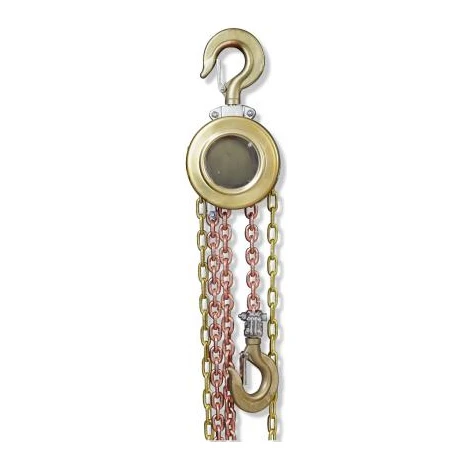
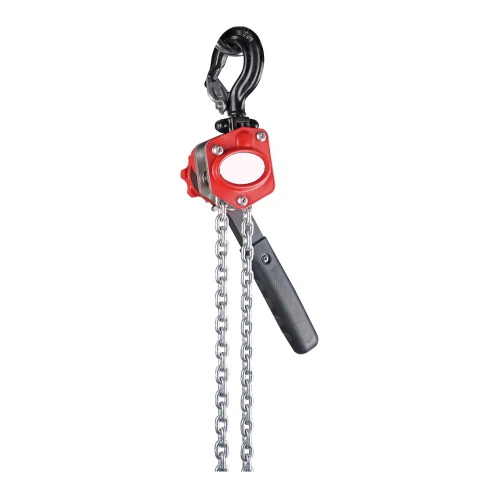
As a Hand Winch supplier, we offer a wide range of high - quality hand winches to meet your specific needs. In addition to hand winches, we also supply other manual lifting tools, such as Hand Lever Hoist and Hand Chain Hoist.
If you are interested in our products or have any questions about hand winches or come - alongs, please do not hesitate to contact us. We are here to provide you with professional advice and support to help you choose the right tool for your project.
References
- "Hand Winches: A Comprehensive Guide" - Industrial Tools Magazine
- "Come - Along Basics" - DIY Tool Review
- "Comparing Hand Winches and Come - Alongs" - Construction Equipment Journal


