

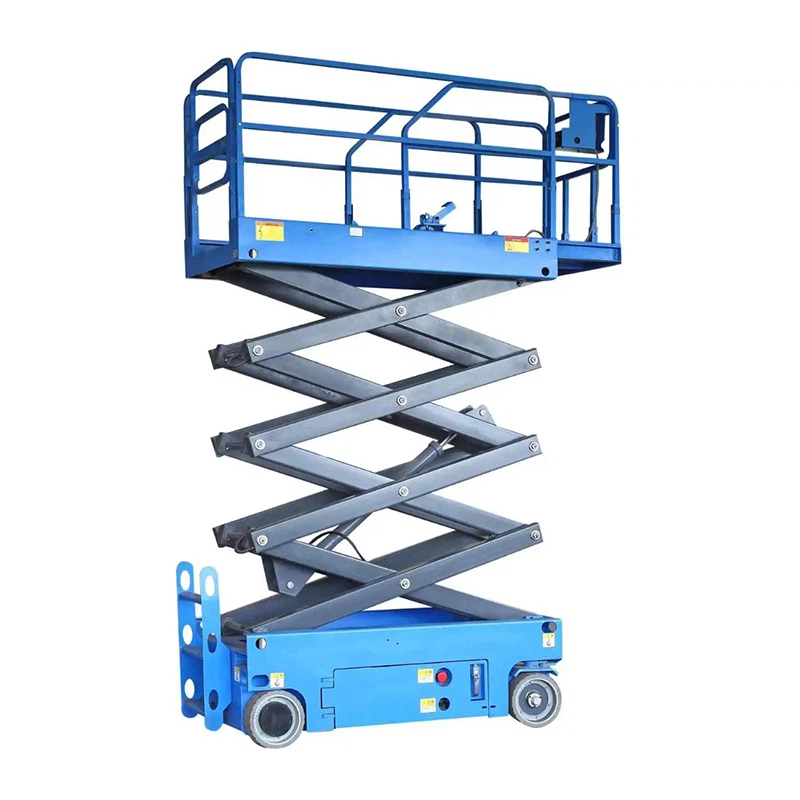
A scissor lift outrigger is a crucial component of a scissor lift, a type of Scissor Lift that is widely used in various industries for tasks such as maintenance, construction, and warehousing. As a leading scissor lift supplier, I am well - versed in the functionality, importance, and types of scissor lift outriggers.
What is a Scissor Lift Outrigger?
A scissor lift outrigger is a stabilizing device attached to the base of a scissor lift. Its primary function is to increase the stability of the lift, especially when it is extended to higher heights or when carrying heavy loads. Outriggers work by extending the footprint of the scissor lift, distributing the weight of the lift and its load over a larger area. This helps prevent the lift from tipping over, which is a significant safety concern in elevated work environments.
How Do Scissor Lift Outriggers Work?
Scissor lift outriggers typically consist of a hydraulic or mechanical system that allows them to be extended and retracted. When the scissor lift is in use, the operator activates the outrigger system, and the outriggers extend horizontally from the base of the lift. Once extended, the outriggers are then lowered to the ground, creating a stable support structure.
The design of the outrigger pads, which are the parts that come into contact with the ground, is also important. These pads are usually made of materials such as steel or high - density plastic and are designed to distribute the load evenly over the ground surface. This helps prevent damage to the ground and ensures a secure footing for the lift.
Types of Scissor Lift Outriggers
Hydraulic Outriggers
Hydraulic outriggers are the most common type of outriggers used on scissor lifts. They are powered by a hydraulic system, which provides smooth and precise control over the extension and retraction of the outriggers. Hydraulic outriggers are known for their high lifting capacity and ability to handle heavy loads. They are also relatively easy to operate, as the hydraulic system can be controlled with a simple switch or lever.
Mechanical Outriggers
Mechanical outriggers, on the other hand, rely on a system of gears, levers, and screws to extend and retract. They are generally less expensive than hydraulic outriggers and are often used on smaller, less expensive scissor lifts. However, they require more physical effort to operate and may not provide the same level of precision as hydraulic outriggers.
Importance of Scissor Lift Outriggers
Safety
Safety is the most important reason for using scissor lift outriggers. When a scissor lift is extended to its maximum height, its center of gravity shifts, making it more prone to tipping over. Outriggers help counteract this by providing additional stability and preventing the lift from becoming unstable. This reduces the risk of accidents and injuries to the operator and other workers in the area.
Load Capacity
Outriggers also play a crucial role in determining the load capacity of a scissor lift. By distributing the weight of the lift and its load over a larger area, outriggers allow the lift to carry heavier loads safely. This is especially important in industries such as construction and manufacturing, where heavy equipment and materials need to be lifted to elevated heights.
Versatility
Scissor lift outriggers increase the versatility of the lift by allowing it to be used on uneven or soft ground surfaces. Without outriggers, a scissor lift may not be able to operate safely on such surfaces, as it could sink or tip over. Outriggers provide a stable base, enabling the lift to be used in a wider range of environments.
Maintenance and Inspection of Scissor Lift Outriggers
Regular maintenance and inspection of scissor lift outriggers are essential to ensure their proper functioning and safety. Here are some key maintenance and inspection tasks:
Visual Inspection
Before each use, the operator should conduct a visual inspection of the outriggers. Check for any signs of damage, such as cracks, bends, or loose bolts. Also, inspect the outrigger pads for wear and tear and ensure that they are in good condition.
Hydraulic System (if applicable)
If the scissor lift has hydraulic outriggers, the hydraulic system should be checked regularly for leaks, proper fluid levels, and smooth operation. Any signs of hydraulic fluid leakage should be addressed immediately, as this can affect the performance of the outriggers.

Lubrication
Mechanical outriggers require regular lubrication to ensure smooth operation. The gears, levers, and screws should be lubricated according to the manufacturer's recommendations.
Comparison with Other Lifting Equipment
When comparing scissor lifts with other types of lifting equipment, such as Articulated Boom Lift and Freight Elevator, scissor lift outriggers offer unique advantages.
Articulated boom lifts are more flexible in terms of reach and can access areas that are difficult to reach with a scissor lift. However, they may not be as stable as scissor lifts, especially when carrying heavy loads. Scissor lift outriggers provide the necessary stability to handle heavy loads safely.
Freight elevators are designed for vertical transportation of goods and are typically used in buildings. They are not as mobile as scissor lifts and may not be suitable for outdoor or on - site work. Scissor lifts, with their outriggers, can be easily transported to different locations and set up quickly for various tasks.
Conclusion
In conclusion, scissor lift outriggers are an essential component of scissor lifts, providing stability, safety, and increased load - carrying capacity. As a scissor lift supplier, I understand the importance of these outriggers and offer a wide range of scissor lifts with high - quality outrigger systems.
Whether you are in the construction, maintenance, or warehousing industry, having a reliable scissor lift with proper outriggers is crucial for the success and safety of your operations. If you are interested in purchasing a scissor lift or have any questions about scissor lift outriggers, please feel free to contact us. We are here to help you find the right solution for your specific needs.
References
- "Scissor Lift Operator's Manual", Various Manufacturers
- "Safety Standards for Aerial Work Platforms", Occupational Safety and Health Administration (OSHA)
- "Lifting Equipment Design and Engineering", Industry Publications


