

Scissor lifts are versatile pieces of equipment widely used in various industries for tasks such as construction, maintenance, and warehousing. As a scissor lift supplier, I understand the importance of knowing the different power sources available for these machines. In this blog post, I will explore the various power sources for scissor lifts, their advantages, and disadvantages, to help you make an informed decision when choosing the right scissor lift for your needs.
Electric Power
Electric scissor lifts are one of the most popular choices in the market. They are powered by rechargeable batteries, which provide a clean and quiet operation. This makes them ideal for indoor use, where noise and emissions are a concern. For example, in shopping malls, hospitals, and office buildings, electric scissor lifts can be used for maintenance tasks without disturbing the normal operations.
One of the main advantages of electric scissor lifts is their low environmental impact. They produce zero emissions during operation, which is in line with the increasing focus on sustainability in the industry. Additionally, electric scissor lifts are generally more energy - efficient compared to other power sources. They require less maintenance since there are no combustion engines, which means fewer moving parts to wear out.
However, electric scissor lifts also have some limitations. Their battery life can be a concern, especially for long - term or continuous use. If the battery runs out during a job, it can cause significant delays. Also, the charging time can be relatively long, typically several hours. This may require careful planning to ensure that the scissor lift is fully charged before use. You can find a wide range of electric scissor lifts on our Scissor Lift page.
Diesel Power
Diesel - powered scissor lifts are known for their high power and durability. They are suitable for outdoor applications, especially in construction sites and large - scale industrial projects. Diesel engines can provide a lot of torque, which allows the scissor lift to carry heavy loads and operate on rough terrains.
The advantage of diesel power is its long - range operation. Unlike electric scissor lifts, diesel scissor lifts can run continuously as long as there is fuel in the tank. They are also more powerful, which means they can lift heavier loads to greater heights. This makes them a popular choice for heavy - duty tasks.
On the other hand, diesel scissor lifts have some drawbacks. They produce emissions, which can be a problem in enclosed or poorly - ventilated areas. The noise level of diesel engines is also relatively high, which may not be suitable for noise - sensitive environments. Moreover, diesel fuel can be expensive, and the cost of maintenance for diesel engines is generally higher than that of electric scissor lifts due to the complexity of the engine.
Gasoline Power
Gasoline - powered scissor lifts are similar to diesel - powered ones in terms of their operation. They are also suitable for outdoor use and can provide sufficient power for most tasks. Gasoline engines are generally lighter and more compact than diesel engines, which can make the scissor lift more maneuverable.

One of the advantages of gasoline power is its wide availability. Gasoline is easier to find compared to diesel in some areas. Gasoline - powered scissor lifts are also relatively easy to start, even in cold weather.
However, gasoline - powered scissor lifts also have their limitations. They produce emissions, similar to diesel scissor lifts, and are not as fuel - efficient as diesel engines. The cost of gasoline can also be relatively high, and the engine may require more frequent maintenance compared to electric scissor lifts.
Dual - Fuel Power
Dual - fuel scissor lifts offer the best of both worlds. They can run on either gasoline or propane. This provides flexibility in terms of fuel choice, depending on the availability and cost. Propane is a cleaner - burning fuel compared to gasoline, which means lower emissions.
The advantage of dual - fuel scissor lifts is their versatility. You can switch between fuels depending on the situation. For example, if propane is not available, you can use gasoline instead. This can be very useful in remote areas or when there are fuel supply issues.
But dual - fuel scissor lifts also have some challenges. They require more complex fuel systems, which can increase the cost of maintenance. Also, the engine may not perform optimally on both fuels, and there may be a slight reduction in power when using propane compared to gasoline.
Manual Power
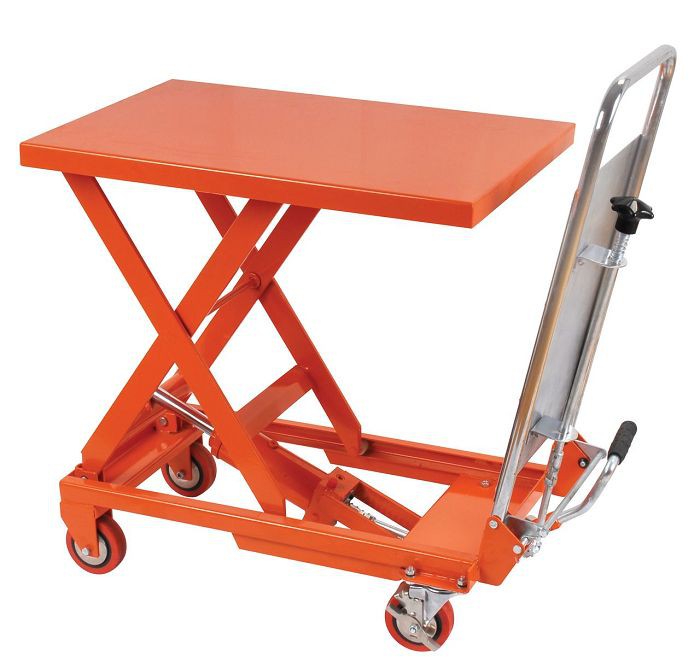
In some cases, manual scissor lifts are also available. These are powered by human effort, usually through a hand - pump mechanism. Manual scissor lifts are simple, lightweight, and inexpensive. They are suitable for small - scale tasks or for situations where power sources are not available.
The main advantage of manual scissor lifts is their simplicity. There are no complex engines or electrical systems, which means less maintenance and lower costs. They are also very portable and can be easily moved around.
However, manual scissor lifts have obvious limitations. They require physical effort to operate, which can be tiring for the user, especially for repeated or heavy - lifting tasks. The lifting capacity is also relatively low compared to powered scissor lifts.
Hybrid Power
Hybrid scissor lifts combine the advantages of electric and diesel or gasoline power. They use an electric motor for normal operations and a combustion engine to charge the battery or provide additional power when needed. This allows for a more efficient use of energy and reduces emissions.
The advantage of hybrid scissor lifts is their energy efficiency and environmental friendliness. They can operate quietly and cleanly in indoor environments using electric power, and then switch to the combustion engine for outdoor or heavy - duty tasks. This provides a good balance between power and sustainability.
But hybrid scissor lifts are more complex in design and more expensive to purchase and maintain. The integration of different power sources requires sophisticated control systems, which can increase the risk of technical problems.
When choosing a scissor lift, it is important to consider your specific needs, the working environment, and the budget. Different power sources have different characteristics, and you need to select the one that best suits your requirements. If you have any questions or need more information about scissor lifts and their power sources, please feel free to contact us for procurement negotiations.
References
- Manufacturer's manuals for scissor lifts
- Industry reports on lifting equipment
- Technical papers on power sources for industrial vehicles


