

Hey there! As a supplier of Freight Elevators, I often get asked about the floor - leveling accuracy requirements for these essential pieces of equipment. In this blog, I'm gonna break down what those requirements are, why they matter, and how they impact the overall performance of a freight elevator.
First off, let's understand what floor - leveling accuracy means. When a freight elevator stops at a floor, it needs to be level with the floor surface within a certain tolerance. This ensures that goods can be safely loaded and unloaded without any tripping hazards or difficulties in moving the cargo.
The floor - leveling accuracy requirements for a freight elevator are mainly determined by two factors: the type of cargo being transported and the loading and unloading equipment used.
For general cargo, the typical floor - leveling accuracy requirement is within ±12.7 mm (±0.5 inches). This tolerance allows for a relatively smooth transition between the elevator car and the floor, making it easier to move pallets, crates, and other common types of freight. If the elevator is off - level by more than this amount, it can cause problems like goods tipping over during loading or unloading, or damage to the wheels of the manual or powered equipment used to move the cargo.
Now, if you're dealing with more delicate or high - value cargo, such as electronics or precision machinery, the floor - leveling accuracy requirements become much stricter. In these cases, the tolerance can be as low as ±3 mm (±0.12 inches). This high level of accuracy is necessary to prevent any shock or vibration that could potentially damage the sensitive equipment.
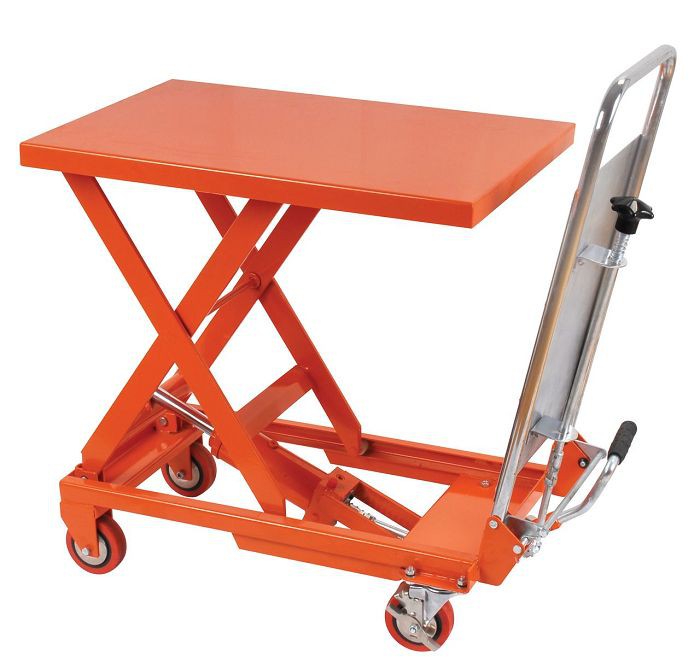
The type of loading and unloading equipment also plays a big role in determining the floor - leveling accuracy requirements. For example, if you're using a Manual Hydraulic Platform Truck, a small deviation in the elevator's level can make it difficult to maneuver the truck in and out of the elevator car. On the other hand, if you're using an Articulated Boom Lift for loading and unloading, the requirements might be different based on the lift's stability and reach.
So, why are these floor - leveling accuracy requirements so important? Well, for starters, they ensure the safety of the operators and the cargo. When the elevator is properly leveled, there's less risk of accidents during loading and unloading. This not only protects the people working with the elevator but also reduces the likelihood of costly damage to the goods.
In addition to safety, accurate floor - leveling also improves the efficiency of the loading and unloading process. When the elevator is level with the floor, it takes less time and effort to move the cargo in and out. This can lead to significant savings in terms of labor costs and overall productivity.

As a Freight Elevator supplier, we take these floor - leveling accuracy requirements very seriously. Our elevators are designed and manufactured to meet the highest industry standards for floor - leveling. We use advanced leveling systems that can automatically adjust the elevator's position to ensure it's always within the specified tolerance.
We also offer regular maintenance and inspection services to make sure that the elevators continue to meet the floor - leveling accuracy requirements over time. During these maintenance checks, our technicians will test the leveling system, adjust any components if necessary, and make sure that the elevator is operating at its best.
If you're in the market for a Freight Elevator, it's important to consider the floor - leveling accuracy requirements for your specific application. You need to think about the type of cargo you'll be transporting, the loading and unloading equipment you'll use, and any other factors that might affect the elevator's performance.
We're here to help you make the right choice. Our team of experts can work with you to understand your needs and recommend the best freight elevator solution for your business. Whether you need a standard elevator with a typical floor - leveling tolerance or a custom - built elevator with extremely strict accuracy requirements, we've got you covered.
If you have any questions or would like to discuss your freight elevator requirements in more detail, don't hesitate to reach out. We're always happy to have a chat and help you find the perfect elevator for your operation. Let's work together to ensure that your freight handling process is safe, efficient, and hassle - free.
References
- Elevator Industry Standards and Guidelines
- Technical Manuals of Freight Elevator Manufacturers
- Industry Research Reports on Freight Elevator Performance


