

A gantry crane is a type of crane that is widely used in various industries for lifting and moving heavy loads. As a gantry crane supplier, I have had the opportunity to witness firsthand how these remarkable machines operate and the significant impact they have on industrial operations. In this blog post, I will delve into the working principles of gantry cranes, explore their different types, and highlight their key components.
Basic Working Principles of Gantry Cranes
At its core, a gantry crane operates on the principle of using a bridge structure supported by legs that run on rails or wheels along a fixed path. This setup allows the crane to move horizontally along the length of the rails, providing a wide range of movement for lifting and transporting heavy objects. The crane's bridge, which spans the gap between the legs, serves as the primary support for the hoisting mechanism, which is responsible for lifting and lowering the load.
The hoisting mechanism of a gantry crane typically consists of a motor, a gearbox, a drum, and a wire rope or chain. When the motor is activated, it drives the gearbox, which in turn rotates the drum. As the drum rotates, it winds or unwinds the wire rope or chain, causing the hook or other lifting attachment to move up or down. The speed and direction of the hoisting motion can be controlled by the operator using a control panel or a remote control device.
In addition to the hoisting mechanism, a gantry crane also has a trolley that moves along the bridge. The trolley is equipped with a hoist and can be used to move the load horizontally along the length of the bridge. This allows the crane to position the load precisely at the desired location. The movement of the trolley is also controlled by the operator using the control panel or remote control.
Types of Gantry Cranes
There are several types of gantry cranes available, each designed to meet specific lifting requirements. The two most common types are single-girder gantry cranes and double-girder gantry cranes.
Single-girder Gantry Crane
A Single-girder Gantry Crane features a single bridge girder that supports the hoisting mechanism and the trolley. This type of crane is typically used for lighter loads and smaller work areas. Single-girder gantry cranes are relatively lightweight and easy to install, making them a popular choice for small to medium-sized businesses. They are also more cost-effective compared to double-girder gantry cranes.
Double-girder Gantry Crane
A Double-girder Gantry Crane has two bridge girders that provide greater strength and stability. This type of crane is capable of lifting heavier loads and is suitable for larger work areas. Double-girder gantry cranes are often used in industries such as shipbuilding, steel mills, and heavy manufacturing. They offer higher lifting capacities and can be equipped with additional features such as multiple hoists and anti-sway systems.
Key Components of Gantry Cranes
To understand how a gantry crane works, it is important to familiarize yourself with its key components. Here are some of the main components of a gantry crane:

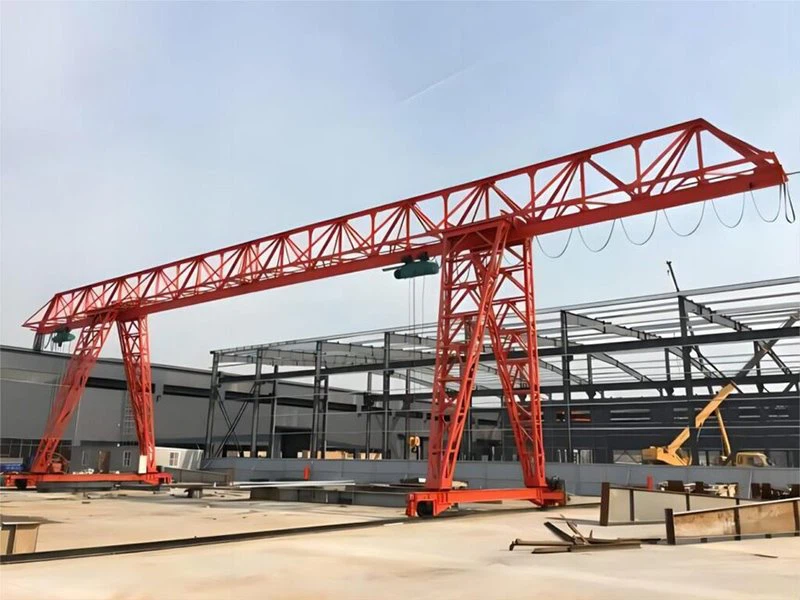
Bridge
The bridge is the main horizontal structure of the gantry crane that spans the gap between the legs. It provides support for the hoisting mechanism and the trolley and allows them to move along the length of the crane. The bridge is typically made of steel and is designed to withstand the weight of the load and the forces generated during operation.
Legs
The legs of a gantry crane support the bridge and allow it to move along the rails or wheels. They are usually made of steel and are designed to provide stability and balance to the crane. The legs can be either fixed or adjustable, depending on the specific requirements of the application.
Hoisting Mechanism
The hoisting mechanism is responsible for lifting and lowering the load. It consists of a motor, a gearbox, a drum, and a wire rope or chain. The hoisting mechanism can be either electric or hydraulic, depending on the size and capacity of the crane.
Trolley
The trolley is a device that moves along the bridge and is equipped with a hoist. It allows the load to be moved horizontally along the length of the bridge. The trolley can be either manually operated or powered by an electric motor.
Controls
The controls of a gantry crane allow the operator to control the movement of the crane, including the hoisting, trolley, and bridge motions. The controls can be either located on a control panel near the crane or operated remotely using a wireless control device.
Safety Features of Gantry Cranes
Safety is of utmost importance when operating a gantry crane. To ensure the safety of the operator and the surrounding environment, gantry cranes are equipped with several safety features. Some of the common safety features include:
Overload Protection
Overload protection is a safety feature that prevents the crane from lifting a load that exceeds its rated capacity. It typically consists of a load sensor that detects the weight of the load and a control system that stops the hoisting mechanism if the load exceeds the rated capacity.
Limit Switches
Limit switches are used to prevent the crane from moving beyond its designated limits. They are installed at the ends of the rails or on the bridge and trolley to stop the movement of the crane when it reaches the end of its travel.
Emergency Stop Button
An emergency stop button is a safety feature that allows the operator to immediately stop the operation of the crane in case of an emergency. It is usually located on the control panel or the remote control device and can be easily accessed by the operator.
Anti-sway System
An anti-sway system is a safety feature that helps to reduce the swaying motion of the load during lifting and movement. It typically consists of a control system that adjusts the speed and direction of the hoisting and trolley motions to minimize the swaying of the load.
Applications of Gantry Cranes
Gantry cranes are used in a wide range of industries for various applications. Some of the common applications of gantry cranes include:
Shipping and Ports
Gantry cranes are commonly used in shipping and ports for loading and unloading cargo from ships. They are capable of lifting heavy containers and other large objects, making them essential for efficient cargo handling operations.
Manufacturing
In the manufacturing industry, gantry cranes are used for moving heavy machinery, raw materials, and finished products within the factory. They can be used to transport large components from one workstation to another, improving productivity and efficiency.
Construction
Gantry cranes are also used in the construction industry for lifting and placing heavy building materials, such as steel beams, concrete blocks, and prefabricated components. They can be used on construction sites to lift materials to different levels of the building, making the construction process faster and more efficient.
Warehousing
In warehousing operations, gantry cranes are used for storing and retrieving goods from high shelves. They can be used to move pallets of goods from one location to another within the warehouse, improving inventory management and order fulfillment.
Conclusion
In conclusion, gantry cranes are powerful and versatile machines that play a crucial role in various industries. By understanding how a gantry crane works, its different types, key components, safety features, and applications, you can make an informed decision when choosing a gantry crane for your specific needs.
As a gantry crane supplier, we are committed to providing high-quality gantry cranes that meet the highest standards of safety and performance. Our team of experts can help you select the right gantry crane for your application and provide you with comprehensive support and service throughout the entire process.
If you are interested in learning more about our gantry cranes or would like to discuss your specific requirements, please do not hesitate to contact us. We look forward to the opportunity to work with you and help you find the perfect gantry crane solution for your business.
References
- Crane Manufacturers Association of America (CMAA). (Year). CMAA Standards for Gantry Cranes.
- Occupational Safety and Health Administration (OSHA). (Year). Crane Safety Standards.
- American Society of Mechanical Engineers (ASME). (Year). ASME B30.20 - Below-the-Hook Lifting Devices.


