

Hey there! As a supplier of Hand Lever Hoists, I often get asked a really interesting question: Can a hand lever hoist be used for pulling as well as lifting? Well, let's dive right into it and find out.
First off, let's talk a bit about what a hand lever hoist is. A hand lever hoist is a manual lifting device that uses a lever to operate. It's a handy tool that's widely used in various industries, from construction to manufacturing. You can check out more about it Hand Lever Hoist.
Now, back to the main question. The short answer is yes, a hand lever hoist can be used for both pulling and lifting. But there's a bit more to it than that.
Lifting with a Hand Lever Hoist
Lifting is probably the most common use for a hand lever hoist. It's designed to lift heavy loads vertically. The way it works is pretty straightforward. You attach the hoist to a fixed point, like a beam or a hook, and then attach the load to the hoist's chain or cable. By operating the lever, you can raise or lower the load.
One of the great things about a hand lever hoist is its simplicity. You don't need any power source, like electricity or hydraulics. It's all manual, which makes it really versatile. You can use it in places where there's no power available, or where you need a more precise and controlled lift.
For example, let's say you're working on a small construction site. You need to lift a heavy piece of equipment to the second floor. You can use a hand lever hoist to do this easily. Just attach the hoist to a sturdy beam on the second floor, and then attach the equipment to the hoist. By pulling the lever, you can slowly and steadily lift the equipment to the desired height.
Pulling with a Hand Lever Hoist
Now, let's talk about pulling. A hand lever hoist can also be used for pulling loads horizontally. This is useful in situations where you need to move a heavy object from one place to another.

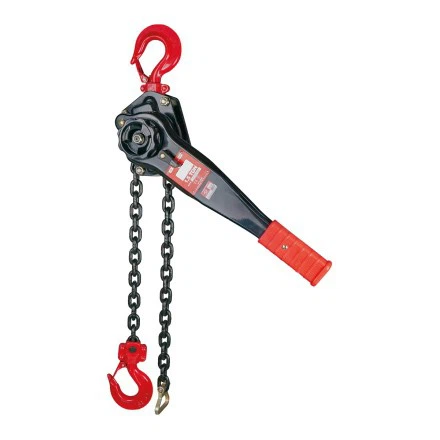
To use a hand lever hoist for pulling, you attach the hoist to a fixed point and then attach the load to the hoist's chain or cable. Instead of lifting the load vertically, you pull the lever to move the load horizontally.
For example, let's say you're working in a warehouse. You have a large pallet of goods that needs to be moved to another part of the warehouse. You can use a hand lever hoist to pull the pallet. Just attach the hoist to a fixed point on the floor or a wall, and then attach the pallet to the hoist. By pulling the lever, you can slowly and steadily move the pallet to the desired location.
Advantages of Using a Hand Lever Hoist for Pulling and Lifting
There are several advantages to using a hand lever hoist for both pulling and lifting.
- Versatility: As we've already mentioned, a hand lever hoist can be used for both pulling and lifting. This makes it a really versatile tool. You don't need to have separate tools for pulling and lifting, which can save you time and money.
- Control: A hand lever hoist gives you a high level of control. You can operate the lever slowly and steadily, which allows you to lift or pull the load with precision. This is especially important when you're working with delicate or valuable equipment.
- Portability: Hand lever hoists are usually small and lightweight, which makes them easy to carry around. You can take them with you to different job sites, and use them wherever you need them.
- Cost-effective: Compared to other types of lifting and pulling equipment, hand lever hoists are relatively inexpensive. They don't require any power source, which means you don't have to pay for electricity or fuel. This can save you a lot of money in the long run.
Limitations of Using a Hand Lever Hoist for Pulling and Lifting
Of course, like any tool, a hand lever hoist also has its limitations.
- Limited capacity: Hand lever hoists usually have a limited lifting and pulling capacity. They're not suitable for lifting or pulling extremely heavy loads. If you need to lift or pull a very heavy load, you may need to use a more powerful hoist or a different type of equipment.
- Manual operation: Since a hand lever hoist is manually operated, it can be tiring to use for long periods of time. You need to have enough strength and endurance to operate the lever. If you're working on a large project, you may need to take breaks to avoid fatigue.
- Limited speed: Hand lever hoists are relatively slow compared to other types of lifting and pulling equipment. If you need to lift or pull a load quickly, you may need to use a more powerful hoist or a different type of equipment.
Comparing Hand Lever Hoists with Other Lifting and Pulling Tools
It's also a good idea to compare hand lever hoists with other types of lifting and pulling tools, like Hand Winch and Hand Chain Hoist.
- Hand Winch: A hand winch is similar to a hand lever hoist in that it's a manual lifting and pulling tool. However, a hand winch usually has a larger drum and a longer cable, which allows it to pull or lift loads over a greater distance. Hand winches are often used for pulling boats, trailers, or other large objects.
- Hand Chain Hoist: A hand chain hoist is another type of manual lifting tool. It uses a chain to lift the load, instead of a cable. Hand chain hoists are usually more powerful than hand lever hoists, and can lift heavier loads. However, they're also more expensive and less portable.
Conclusion
So, to sum it up, a hand lever hoist can definitely be used for both pulling and lifting. It's a versatile, cost-effective, and easy-to-use tool that's suitable for a wide range of applications. However, it also has its limitations, so you need to choose the right tool for the job.
If you're in the market for a hand lever hoist, or if you have any questions about using one for pulling or lifting, feel free to get in touch. We're here to help you find the right solution for your needs.
References
- "Hand Hoists: A Guide to Selection and Use", Industrial Equipment News
- "Manual Lifting Equipment: Safety and Best Practices", Occupational Safety and Health Administration


