

When it comes to the task of lifting objects from a deep pit, many factors need to be considered to ensure both efficiency and safety. As a supplier of Hand Lever Hoists, I've encountered numerous inquiries regarding the suitability of these tools for such demanding operations. In this blog, I'll delve into the technical aspects, advantages, limitations, and safety considerations of using a Hand Lever Hoist for lifting objects from a deep pit.
Technical Overview of Hand Lever Hoists
A Hand Lever Hoist is a mechanical device designed for lifting and pulling heavy loads. It operates on a simple yet effective principle: by manually operating a lever, the user can engage a series of gears and ratchets to lift or lower the load. The hoist typically consists of a housing, a lever, a chain or wire rope, and a hook for attaching the load.
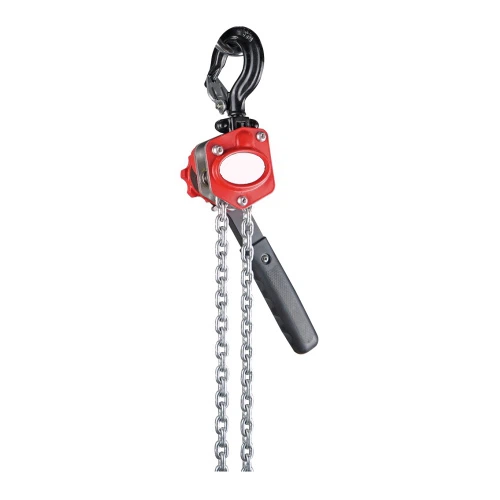

The key advantage of a Hand Lever Hoist lies in its portability and ease of use. Unlike electric or hydraulic hoists, which require a power source or complex setup, a Hand Lever Hoist can be used in remote locations or areas without access to electricity. This makes it an ideal choice for lifting objects from deep pits, where power sources may be limited or unavailable.
Advantages of Using a Hand Lever Hoist for Deep Pit Lifting
- Portability: As mentioned earlier, the portability of a Hand Lever Hoist is a significant advantage. It can be easily transported to the site of the deep pit and set up quickly without the need for extensive equipment or infrastructure.
- Precise Control: Hand Lever Hoists offer precise control over the lifting process. The user can adjust the speed and direction of the lift by simply operating the lever, allowing for careful positioning of the load. This is particularly important when lifting objects from a deep pit, where accuracy is crucial to avoid damage to the load or the surrounding environment.
- Safety: Hand Lever Hoists are designed with safety features such as overload protection and a reliable braking system. These features ensure that the load is securely held in place during the lifting process, reducing the risk of accidents or injuries.
- Cost-Effective: Compared to other types of hoists, Hand Lever Hoists are relatively inexpensive. They require minimal maintenance and do not consume any energy, making them a cost-effective solution for lifting objects from deep pits.
Limitations of Using a Hand Lever Hoist for Deep Pit Lifting
- Limited Lifting Capacity: Hand Lever Hoists typically have a lower lifting capacity compared to electric or hydraulic hoists. While they can handle loads ranging from a few hundred kilograms to several tons, they may not be suitable for extremely heavy loads.
- Manual Operation: The manual operation of a Hand Lever Hoist can be physically demanding, especially when lifting heavy loads or operating for extended periods. This may limit the efficiency and productivity of the lifting process, particularly in large-scale operations.
- Depth Limitations: The length of the chain or wire rope on a Hand Lever Hoist is limited, which may restrict its use for lifting objects from very deep pits. In such cases, alternative lifting methods or equipment may be required.
Safety Considerations
When using a Hand Lever Hoist for lifting objects from a deep pit, it is essential to follow strict safety guidelines to prevent accidents and injuries. Here are some key safety considerations:
- Inspection: Before using the hoist, thoroughly inspect it for any signs of damage or wear. Check the chain or wire rope, hooks, and other components for cracks, bends, or other defects.
- Proper Setup: Ensure that the hoist is properly installed and secured to a stable structure. Use appropriate rigging equipment and follow the manufacturer's instructions for setup and operation.
- Load Capacity: Do not exceed the rated load capacity of the hoist. Overloading the hoist can cause it to fail, resulting in serious accidents or injuries.
- Operator Training: Only trained and qualified personnel should operate the hoist. Provide comprehensive training on the proper use, maintenance, and safety procedures of the hoist.
- Communication: Establish clear communication between the operator and other personnel involved in the lifting process. Use hand signals or other communication devices to ensure that everyone is aware of the operation and any potential hazards.
Alternative Lifting Methods
In some cases, a Hand Lever Hoist may not be the most suitable option for lifting objects from a deep pit. Here are some alternative lifting methods that you may consider:
- Hand Winch: A Hand Winch is another manual lifting device that can be used for lifting objects from a deep pit. It operates on a similar principle to a Hand Lever Hoist but uses a drum and cable instead of a chain or wire rope. Hand Winches are typically more suitable for lighter loads and longer distances.
- Hand Chain Hoist: A Hand Chain Hoist is a popular choice for lifting heavy loads in industrial applications. It uses a chain to lift and lower the load and offers a higher lifting capacity compared to a Hand Lever Hoist. Hand Chain Hoists are available in various sizes and configurations to suit different lifting requirements.
- Electric or Hydraulic Hoist: For larger-scale operations or extremely heavy loads, electric or hydraulic hoists may be more suitable. These hoists offer higher lifting capacities and greater efficiency compared to manual hoists. However, they require a power source and may be more expensive to purchase and maintain.
Conclusion
In conclusion, a Hand Lever Hoist can be a viable option for lifting objects from a deep pit, provided that its limitations are taken into account. Its portability, precise control, and safety features make it a popular choice for many applications. However, it is essential to carefully assess the lifting requirements and choose the most appropriate lifting method based on the specific circumstances.
As a supplier of Hand Lever Hoists, I'm committed to providing high-quality products and expert advice to help you choose the right lifting equipment for your needs. If you have any questions or need further information, please don't hesitate to contact me. We can discuss your specific requirements and explore the best solutions for your lifting operations. Whether you're dealing with a small-scale project or a large industrial application, we're here to assist you in making the right choice.
References
- "Lifting Equipment Handbook" by Andrew Parr
- "Safety in Lifting Operations" by the Health and Safety Executive


