

Can a hand chain hoist be used for lifting in a radioactive environment?
As a seasoned supplier of hand chain hoists, I often encounter various inquiries from customers regarding the application scenarios of our products. One question that has recently come up more frequently is whether a hand chain hoist can be used for lifting in a radioactive environment. This is a complex and crucial topic that requires a comprehensive analysis from multiple perspectives.
Understanding Radioactive Environments
Radioactive environments are characterized by the presence of ionizing radiation, which can come from natural sources such as radon gas or artificial sources like nuclear power plants, nuclear research facilities, and radioactive waste storage sites. Ionizing radiation has the ability to remove electrons from atoms, creating ions. This process can cause damage to living tissues and materials over time.

The levels of radiation in these environments can vary significantly. In some areas, the radiation levels may be relatively low, posing a minimal risk to human health and equipment. However, in other areas, such as the vicinity of a nuclear reactor core or a radioactive waste disposal site, the radiation levels can be extremely high, which can have a profound impact on the performance and integrity of equipment.
The Structure and Function of Hand Chain Hoists
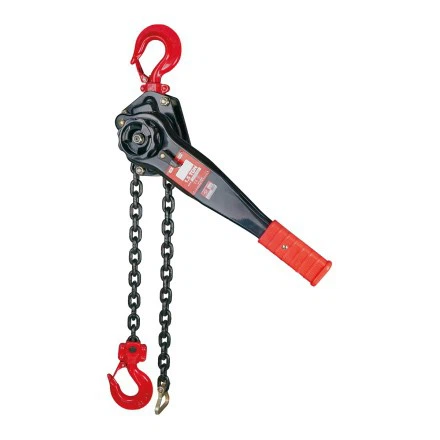
Before delving into the suitability of hand chain hoists in radioactive environments, it is essential to understand their basic structure and function. A Hand Chain Hoist is a mechanical device used for lifting and lowering heavy loads. It consists of a chain, a set of gears, a hook, and a housing. The operator pulls the chain to rotate the gears, which in turn lift or lower the load attached to the hook.
The materials used in the construction of hand chain hoists typically include steel for the chain and gears, and various metals and plastics for the housing. These materials are chosen for their strength, durability, and corrosion resistance.
Potential Effects of Radiation on Hand Chain Hoists
Radiation can have several adverse effects on the components of a hand chain hoist.
Material Degradation: Ionizing radiation can cause changes in the physical and chemical properties of materials. For example, radiation can lead to embrittlement of metals, which reduces their ductility and increases the risk of cracking. In the case of hand chain hoists, the chain and gears are critical components, and any degradation in their material properties can compromise the safety and performance of the hoist.
Lubrication Issues: Hand chain hoists rely on lubricants to ensure smooth operation of the gears and other moving parts. Radiation can cause the lubricants to break down, leading to increased friction and wear. This can result in reduced efficiency and a shorter lifespan of the hoist.
Electrical and Electronic Components (if any): Some modern hand chain hoists may incorporate electrical or electronic components, such as sensors or control systems. Radiation can damage these components, causing malfunctions or complete failure.
Factors to Consider for Using Hand Chain Hoists in Radioactive Environments
Despite the potential challenges, there are situations where a hand chain hoist can be used in a radioactive environment. However, several factors need to be carefully considered.
Radiation Level: The first and most important factor is the level of radiation in the environment. If the radiation level is relatively low, the impact on the hand chain hoist may be minimal. In such cases, proper shielding and regular maintenance can help mitigate the effects of radiation. However, in high-radiation areas, the use of a hand chain hoist may not be feasible without significant modifications or the use of specialized radiation-resistant materials.
Duration of Use: The length of time the hand chain hoist will be exposed to radiation also matters. Short-term exposure to radiation may cause less damage compared to long-term exposure. If the hoist is only needed for a brief period in a radioactive environment, the risk of radiation-induced damage may be acceptable.
Load Requirements: The weight and type of load to be lifted are crucial considerations. If the load is relatively light and the hoist is not subjected to excessive stress, it may be more likely to withstand the effects of radiation. However, if the load is heavy or requires frequent lifting and lowering, the hoist may be more vulnerable to damage.
Mitigation Strategies
If it is determined that a hand chain hoist can be used in a radioactive environment, several mitigation strategies can be employed to minimize the risk of radiation-induced damage.
Shielding: The use of radiation shielding materials can help reduce the amount of radiation that reaches the hoist. Lead, concrete, and other dense materials are commonly used for shielding. The hoist can be enclosed in a shielded housing or located in a shielded area to protect it from radiation.
Regular Inspection and Maintenance: Regular inspection and maintenance are essential to detect any signs of radiation-induced damage early. This includes checking the chain, gears, lubricants, and other components for wear, cracking, or other defects. Any damaged components should be replaced immediately to ensure the safety and performance of the hoist.
Use of Radiation-Resistant Materials: In some cases, it may be possible to use radiation-resistant materials in the construction of the hand chain hoist. For example, certain types of stainless steel and polymers are more resistant to radiation than traditional materials. Using these materials can help extend the lifespan of the hoist in a radioactive environment.
Comparison with Other Lifting Equipment
When considering lifting equipment for use in a radioactive environment, it is also worth comparing hand chain hoists with other types of lifting equipment, such as Hand Lever Hoist and Hand Winch.
Hand lever hoists and hand winches operate on similar principles to hand chain hoists but may have different designs and materials. They may also have different levels of resistance to radiation. For example, hand lever hoists typically have a more compact design and may be easier to shield. Hand winches, on the other hand, may be more suitable for applications where a longer pulling distance is required.
Conclusion
In conclusion, the use of a hand chain hoist in a radioactive environment is a complex issue that requires careful consideration of various factors. While there are potential challenges associated with radiation-induced damage, it is possible to use a hand chain hoist in such an environment with proper precautions and mitigation strategies.
As a supplier of hand chain hoists, we are committed to providing our customers with high-quality products and expert advice. If you are considering using a hand chain hoist in a radioactive environment, we encourage you to contact us to discuss your specific requirements. Our team of experienced professionals can help you determine the most suitable solution for your lifting needs and provide guidance on how to ensure the safe and efficient operation of the hoist in a radioactive environment.
References
- "Radiation Effects on Materials" by John Doe, published in the Journal of Nuclear Materials Science.
- "Lifting Equipment in Hazardous Environments" by Jane Smith, available from the International Institute of Lifting Technology.


