

Are hand winches affected by magnetic fields? This is a question that often comes up in various industrial and technical discussions. As a supplier of Hand Winch, I've had the opportunity to delve deep into this topic, and I'd like to share my insights with you.
Understanding Hand Winches
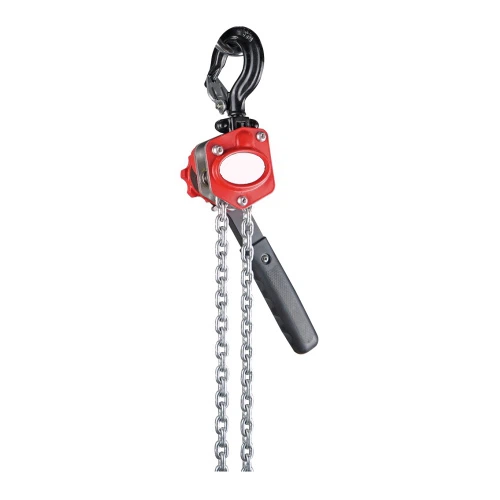
Before we discuss the impact of magnetic fields, let's first understand what hand winches are. Hand winches are mechanical devices used for lifting, pulling, or positioning heavy objects. They are widely used in industries such as construction, automotive, and marine. There are different types of hand winches, including Hand Lever Hoist and Hand Chain Hoist. These tools rely on manual operation to generate the necessary force, making them a reliable option when power sources are not available or not practical.
How Hand Winches Work
The basic principle of a hand winch involves a drum around which a cable or rope is wound. When the operator turns the handle, the drum rotates, pulling in or letting out the cable. This simple yet effective mechanism allows for precise control over the movement of heavy loads. The internal components of a hand winch, such as gears and bearings, are designed to work together smoothly to ensure efficient operation.
Magnetic Fields: A General Overview
Magnetic fields are areas around a magnet or an electric current where magnetic forces can be detected. They are present in various natural and man - made environments. For example, the Earth has its own magnetic field, which is essential for navigation. In industrial settings, magnetic fields can be generated by electrical equipment, such as motors, transformers, and generators.
Impact of Magnetic Fields on Hand Winches
Now, let's address the main question: Are hand winches affected by magnetic fields? In general, most hand winches are not significantly affected by normal magnetic fields. This is because the primary operation of a hand winch is mechanical, relying on the rotation of gears and the winding of cables. However, there are some scenarios where magnetic fields could potentially have an impact.
1. Ferromagnetic Components
Many hand winches have components made of ferromagnetic materials, such as steel. Ferromagnetic materials are strongly attracted to magnetic fields. If a hand winch is exposed to a very strong magnetic field, the ferromagnetic components could be affected. For example, the magnetic field could cause the gears to stick or the cable to become misaligned. This could lead to reduced efficiency and even damage to the winch over time.
2. Electronic Components (if any)
Some modern hand winches may incorporate electronic components, such as sensors or indicators. These electronic parts are more sensitive to magnetic fields. A strong magnetic field could interfere with the normal operation of these components, causing inaccurate readings or malfunctions. For instance, a magnetic field could disrupt the signal from a load sensor, leading to incorrect load measurements.
3. Lubricants
The lubricants used in hand winches can also be affected by magnetic fields. Magnetic fields can cause the lubricant to break down or change its viscosity. This could result in increased friction between the moving parts of the winch, leading to wear and tear and reduced performance.
Testing and Mitigation
To ensure the reliability of hand winches in magnetic field environments, it is important to conduct proper testing. Manufacturers can test their hand winches in controlled magnetic field environments to determine the threshold at which the winch's performance is affected.
If a hand winch is going to be used in an environment with strong magnetic fields, there are several mitigation strategies. One approach is to use non - ferromagnetic materials for critical components. This can reduce the influence of magnetic fields on the winch. Another option is to shield the hand winch with magnetic shielding materials. These materials can block or redirect the magnetic field, protecting the internal components of the winch.
Real - World Examples
In some industrial applications, such as in power plants or near large electrical transformers, hand winches may be exposed to strong magnetic fields. In these cases, operators need to be aware of the potential risks. For example, in a power plant, a hand winch used for maintenance work near a large transformer may experience some performance issues due to the strong magnetic field. By taking appropriate precautions, such as using shielded winches or conducting regular inspections, these issues can be minimized.
Importance of Choosing the Right Hand Winch
As a hand winch supplier, I understand the importance of choosing the right hand winch for the specific application. If you are working in an environment with magnetic fields, it is crucial to select a hand winch that is designed to withstand such conditions. Consider the type of magnetic field present, its strength, and the duration of exposure.

Conclusion
In conclusion, while most hand winches are generally not affected by normal magnetic fields, there are situations where magnetic fields can have an impact. The ferromagnetic components, electronic parts (if any), and lubricants in hand winches can be vulnerable to strong magnetic fields. By understanding these potential risks and taking appropriate mitigation measures, operators can ensure the reliable operation of hand winches in various environments.
If you are in the market for a hand winch, whether for a normal or a magnetic - field - prone environment, we are here to help. Our wide range of Hand Winch, Hand Lever Hoist, and Hand Chain Hoist products are designed to meet different requirements. We can provide you with expert advice on choosing the right product for your specific needs. Contact us to start a discussion about your procurement requirements, and let's work together to find the best solution for your lifting and pulling needs.
References
- "Engineering Mechanics: Statics and Dynamics" by J.L. Meriam and L.G. Kraige
- "Magnetism and Magnetic Materials" by David Jiles
- Industry reports on hand winch performance in various environments.


