

As a supplier of Hand Lever Hoists, I often get asked if our products are compliant with safety standards. This is a crucial question, as safety is non - negotiable when it comes to lifting equipment. In this blog post, I'll dive deep into this topic, discussing why safety compliance matters, how we ensure our Hand Lever Hoists meet the standards, and what you should look for when choosing a hoist.
Why Safety Standards Matter
Safety standards for lifting equipment like Hand Lever Hoists aren't just rules on paper. They're meticulously crafted guidelines designed to protect workers and equipment. When you're using a hoist in a workplace, whether it's a construction site, a manufacturing plant, or a warehouse, a failure in the hoist can lead to some pretty serious consequences. We're talking about potential injuries to workers, damage to the goods being lifted, and even costly downtime for your business.
For example, if a hoist fails while lifting a heavy load, it can cause the load to fall. This not only endangers the people working around the hoist but can also cause significant property damage. That's why regulatory bodies around the world have set up strict safety standards. These standards cover everything from the design and construction of the hoist to its operation and maintenance.
How Our Hand Lever Hoists Are Compliant
At our company, we take safety very seriously. Our Hand Lever Hoists are designed and manufactured with strict adherence to international safety standards.
Material Selection
We start by carefully choosing the materials for our hoists. High - quality steel is used for the critical components like the chain and the frame. This steel is strong and durable, capable of withstanding the heavy loads that our hoists are designed to lift. For instance, the chain is made from hardened alloy steel, which offers excellent resistance to wear and tear, and has a high tensile strength.
Design and Manufacturing Process
Our design team uses the latest engineering techniques to ensure that the hoist's structure can handle the forces involved in lifting. During the manufacturing process, we have a series of quality control checks. Every single hoist goes through rigorous testing before it leaves our factory. We test the lifting capacity, the smoothness of operation, and the braking system to make sure they all meet the safety standards.
Certification
We're proud to say that our Hand Lever Hoists are certified by recognized international organizations. These certifications are proof that our products meet the highest safety and quality standards. It gives our customers the peace of mind that they're using a reliable and safe product.
Comparison with Other Lifting Equipment
It's also interesting to compare Hand Lever Hoists with other types of manual lifting equipment, like Hand Chain Hoist and Hand Winch.
Hand Chain Hoist
A Hand Chain Hoist is another popular choice for manual lifting. While it's also very useful, a Hand Lever Hoist has some advantages in terms of safety. Hand Lever Hoists usually offer more precise control over the load. You can make small, incremental movements easily, which is great when you need to position a load accurately. In contrast, a Hand Chain Hoist might require more effort to control in fine - tuned movements, and there's a slight risk of the chain getting jammed.
Hand Winch
A Hand Winch is often used for pulling loads rather than lifting them vertically. Hand Lever Hoists are better suited for vertical lifting tasks. The design of a Hand Lever Hoist provides better mechanical advantage for vertical lifting, and it has built - in safety features that are specifically designed for this type of operation, such as a reliable braking system to hold the load in place.
What to Look for When Choosing a Hand Lever Hoist
If you're in the market for a Hand Lever Hoist, here are some key things to look for to ensure safety compliance:
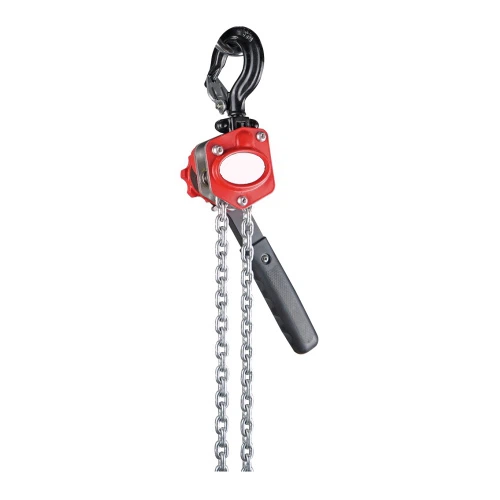

Certification
As mentioned earlier, look for hoists that are certified by recognized organizations. Certifications like CE, ASME, or ISO indicate that the hoist has been tested and meets certain safety and quality benchmarks.
Load Capacity
Make sure the hoist's load capacity is suitable for your needs. Don't try to lift a load that exceeds the hoist's rated capacity, as this can lead to a dangerous situation.
Braking System
A reliable braking system is essential. The brake should be able to hold the load securely in place, even when the operator releases the lever. Test the braking system before using the hoist to ensure it works properly.
Ease of Use and Maintenance
A hoist that's easy to use reduces the risk of operator error. Also, consider the maintenance requirements. Regular maintenance is crucial for keeping the hoist safe and in good working condition.
Contact Us for Your Hand Lever Hoist Needs
If you're interested in purchasing a Hand Lever Hoist, we're here to help. Our team of experts can provide you with all the information you need about our products, including safety features, load capacities, and pricing. We offer a wide range of Hand Lever Hoists to suit different applications, from light - duty to heavy - duty lifting.
Whether you're a small business looking for a simple hoist for occasional use or a large industrial company in need of multiple hoists for daily operations, we've got you covered. Just reach out to us for a detailed discussion about your requirements, and we'll work with you to find the perfect solution. You can visit our product page Hand Lever Hoist to learn more about our offerings.
In conclusion, our Hand Lever Hoists are fully compliant with safety standards, thanks to our strict material selection, advanced design and manufacturing processes, and thorough testing. When you choose our hoists, you're choosing a safe, reliable, and high - quality lifting solution.
References
- "Safety Standards for Lifting Equipment," International Labour Organization.
- "Hand - Operated Hoists: Design and Operation," American Society of Mechanical Engineers.


