

Hey there! As a supplier of Freight Elevators, I often get asked a pretty interesting question: Are freight elevators faster than passenger elevators? It's a question that might seem simple at first glance, but there's actually a lot more to it than you might think. So, let's dive right in and break it down.
How Elevators Work
First off, let's understand how these two types of elevators operate. Passenger elevators are designed to move people efficiently between floors in buildings like offices, hotels, and apartments. They're built with a focus on comfort, safety, and speed that's suitable for human passengers. On the other hand, Freight Elevator are made to transport heavy goods, equipment, and sometimes even vehicles. They need to be sturdy enough to handle large loads, which means they're constructed differently from passenger elevators.
Speed Factors
When it comes to speed, there are several factors that come into play. One of the biggest factors is the design and purpose of the elevator. Passenger elevators are usually designed to travel at a speed that's comfortable for people. If they go too fast, it can make passengers feel uneasy or even cause motion sickness. So, most passenger elevators have a top speed that's within a range that's considered safe and comfortable for humans.
Freight elevators, on the other hand, don't have to worry about the comfort of passengers. Their main goal is to move heavy loads as quickly as possible. However, their speed is still limited by the weight they're carrying. The heavier the load, the slower the elevator will generally move. This is because the motor and other components need to work harder to lift and lower the heavy weight.
Another factor that affects speed is the number of stops. Passenger elevators often make multiple stops on different floors to pick up and drop off passengers. This can slow down their overall travel time. Freight elevators, on the other hand, may not need to make as many stops, especially if they're transporting goods to a specific floor. This can give them an advantage in terms of speed, especially in buildings where there are fewer floors or where the freight elevator is used for a specific purpose.
Real - World Examples
Let's look at some real - world examples to see how these factors play out. In a high - rise office building, a passenger elevator might have a speed of around 1,000 feet per minute. This speed allows it to quickly move people between floors without making them feel uncomfortable. However, if the elevator has to stop at multiple floors to pick up and drop off passengers, it can take a while to reach its destination.
Now, consider a warehouse that uses a freight elevator. The freight elevator might have a lower top speed, say around 500 feet per minute. But if it's only transporting goods from the ground floor to the second floor and doesn't have to make any stops in between, it can get the job done relatively quickly.
Advantages of Freight Elevators
Even if freight elevators aren't always faster in terms of top speed, they have other advantages. For one, they can carry much heavier loads. A passenger elevator might have a weight capacity of a few thousand pounds, while a freight elevator can handle loads of 10,000 pounds or more. This makes them essential for industries that need to move large and heavy items, such as manufacturing, warehousing, and construction.
Another advantage is their durability. Freight elevators are built to withstand the wear and tear of heavy use. They have stronger cables, more robust motors, and sturdier cabins than passenger elevators. This means they can last longer and require less maintenance, which can save businesses money in the long run.
Applications and Use Cases
Freight elevators are used in a wide variety of applications. In warehouses, they're used to move pallets of goods between different levels. In factories, they can transport heavy machinery and equipment. They're also used in construction sites to move building materials up and down.
Passenger elevators, on the other hand, are mainly used in buildings where people need to move between floors. They're a common sight in office buildings, hotels, and residential complexes.
Our Freight Elevators
As a supplier of Freight Elevator, we understand the unique needs of our customers. Our freight elevators are designed to be efficient, durable, and safe. We use the latest technology to ensure that our elevators can handle heavy loads and operate at a speed that's suitable for your business.

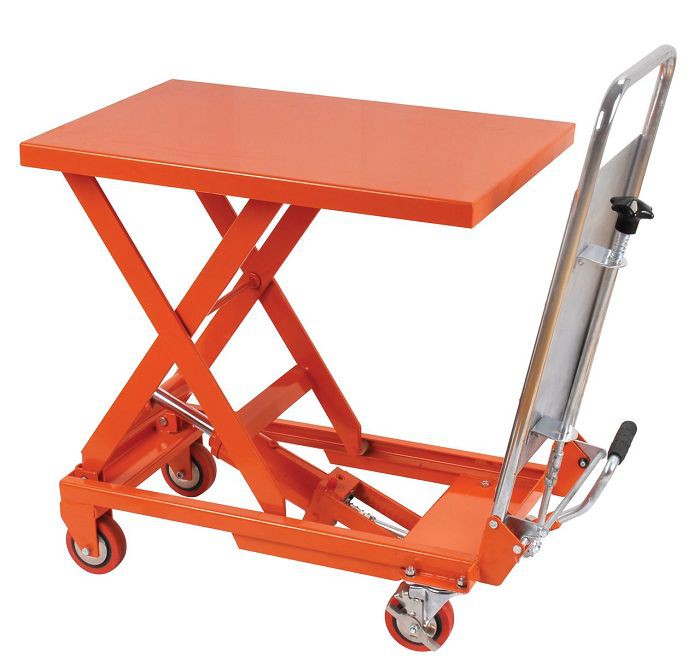
We also offer a range of related products. For example, if you need to move goods around on the ground floor before loading them into the elevator, our Manual Hydraulic Platform Truck can be a great option. It's easy to use and can handle a significant amount of weight.
And if you need to work at height, our Articulated Boom Lift provides a safe and efficient way to reach elevated areas.
Conclusion
So, are freight elevators faster than passenger elevators? The answer isn't a simple yes or no. It depends on a variety of factors, including the design of the elevator, the weight of the load, and the number of stops. In some cases, freight elevators can be faster, especially when they're used for specific purposes and don't have to make many stops. In other cases, passenger elevators might be faster in terms of top speed, but their travel time can be affected by multiple stops.
If you're in the market for a freight elevator or other lifting and handling equipment, we're here to help. We can provide you with the right solutions for your business needs. Whether you're running a warehouse, a factory, or a construction site, our products can make your operations more efficient and productive. Contact us to start a conversation about your requirements, and let's work together to find the best equipment for you.
References
- Elevator Industry Handbook
- Building Construction and Design Manuals


